Bringing New Ideas to Enrichment: Nexplore at SPARC 2026


At Nexplore, we believe the best enrichment experiences combine fun, creativity, and purposeful learning. That’s why attending the SPARC National Conference 2026 in Arizona was a valuable opportunity for our team to exchange ideas, explore innovative approaches, and discover new ways to make summer and auxiliary programs even more engaging for children and families.
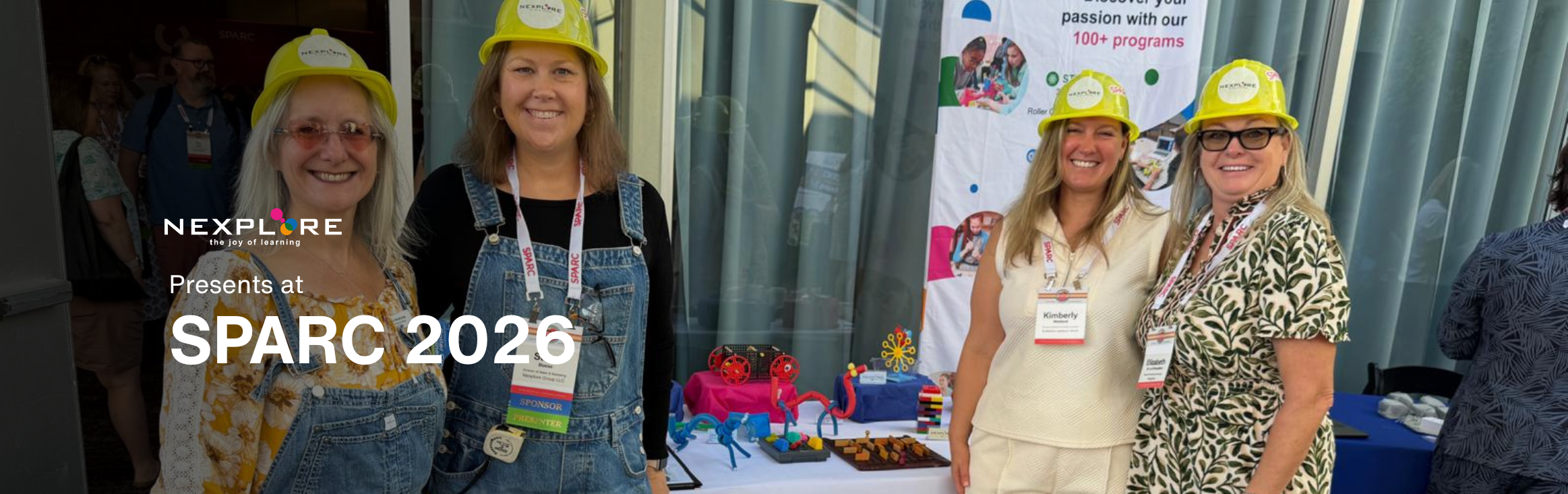
Staci, our Director of Sales & Marketing, and Nomi and Elizabeth, our Regional Relationship Managers, participated in workshops, professional learning sessions, and interactive activities focused on strengthening summer programming, sharing best practices, and building meaningful experiences that inspire children to learn through exploration.
Learning Through Play and Hands-On Experiences
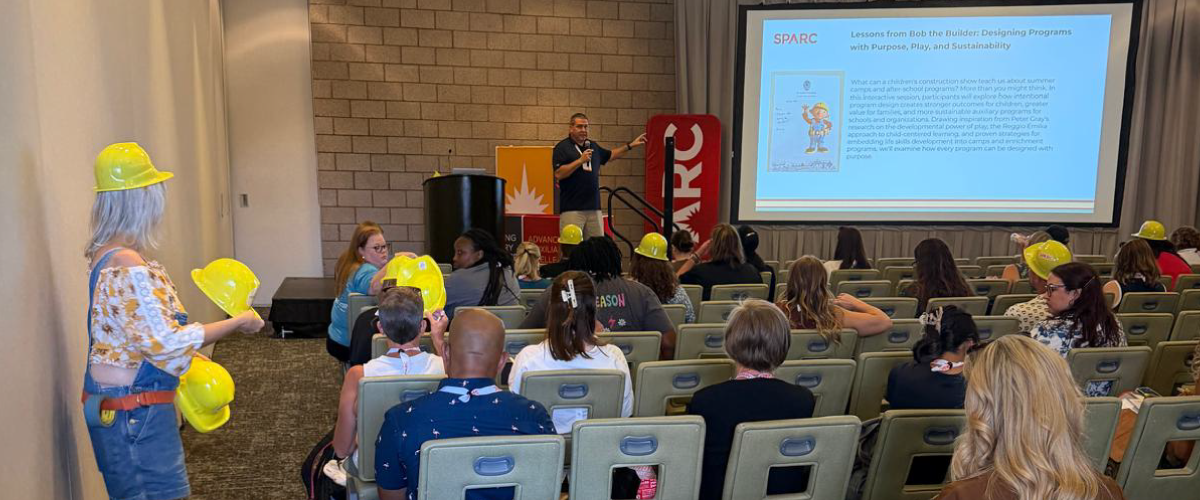
One of the highlights was the Bob the Builder workshop with Bob Rojee, Senior Advisor at SPARC, where Nomi explored hands-on, interactive learning activities and how creative experiences can encourage student engagement. The session reinforced the importance of designing enrichment opportunities that invite children to participate, experiment, and discover new ideas.
Nomi and Staci also joined a SPARC Burst featuring the Art of Play workshop and the Rush Hour game. This activity demonstrated how games can make learning both fun and purposeful by encouraging logical reasoning, strategic thinking, planning, persistence, and problem-solving.
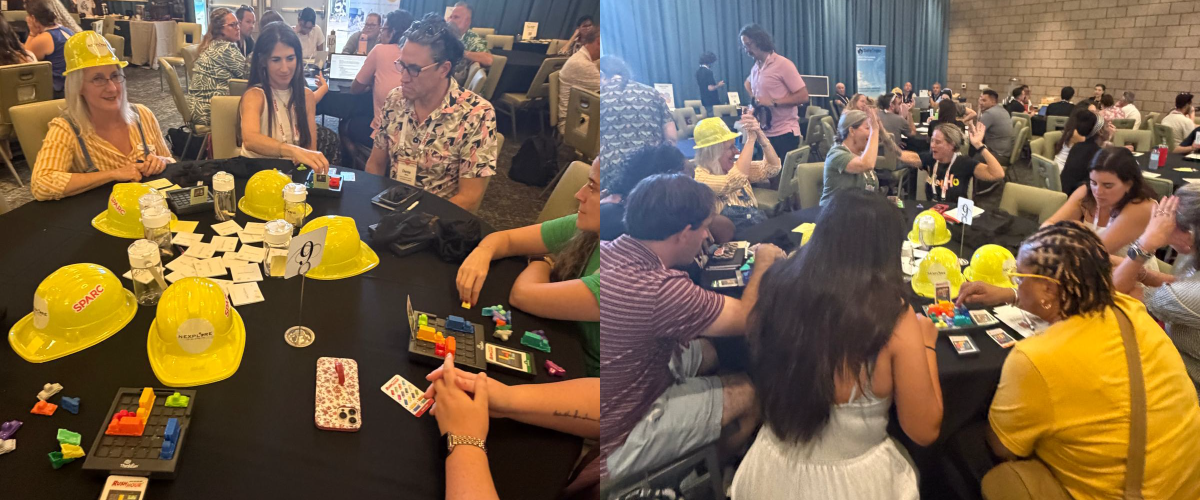
When children work through a challenge, test different solutions, and learn from their mistakes, they develop skills that extend beyond the activity itself. These playful experiences help build confidence, spark curiosity, and make learning memorable.
Creativity That Makes Learning Memorable
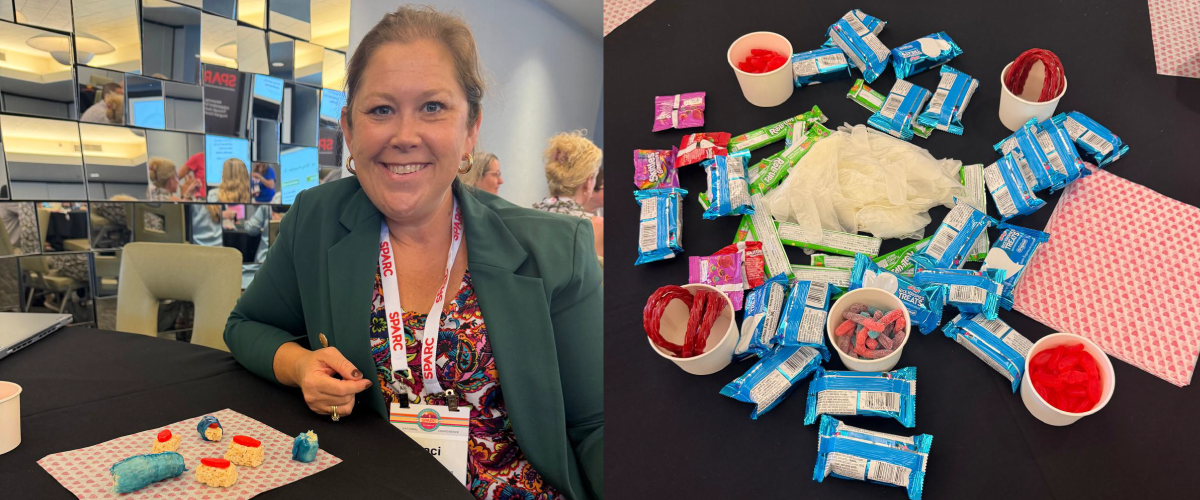
Another highlight was Staci’s participation in a partner workshop with Caitlin and Jara from Pinecrest Pop-Ups. Through creative, hands-on activities, including making candy sushi, participants explored how playful experiences can encourage creativity, collaboration, and connection.
Activities like these are a reminder that meaningful learning can happen in unexpected ways. By combining imagination with opportunities to create and participate, enrichment programs can make new experiences approachable, exciting, and memorable for students.
Fresh Ideas for Summer and Auxiliary Programs

Throughout SPARC 2026, the team explored new programming ideas, connected with professionals across the enrichment community, and exchanged perspectives on how to strengthen summer camps and auxiliary offerings.
These conversations and experiences reinforced an important principle: fun and purposeful learning go hand in hand. The strongest enrichment experiences give children opportunities to explore their interests, develop new skills, collaborate with others, and discover what they are capable of achieving.
At Nexplore, we are always looking for ways to bring fresh ideas into our programs while creating experiences that reflect the evolving needs of schools, children, and families.
Continuing to Foster the Joy of Learning
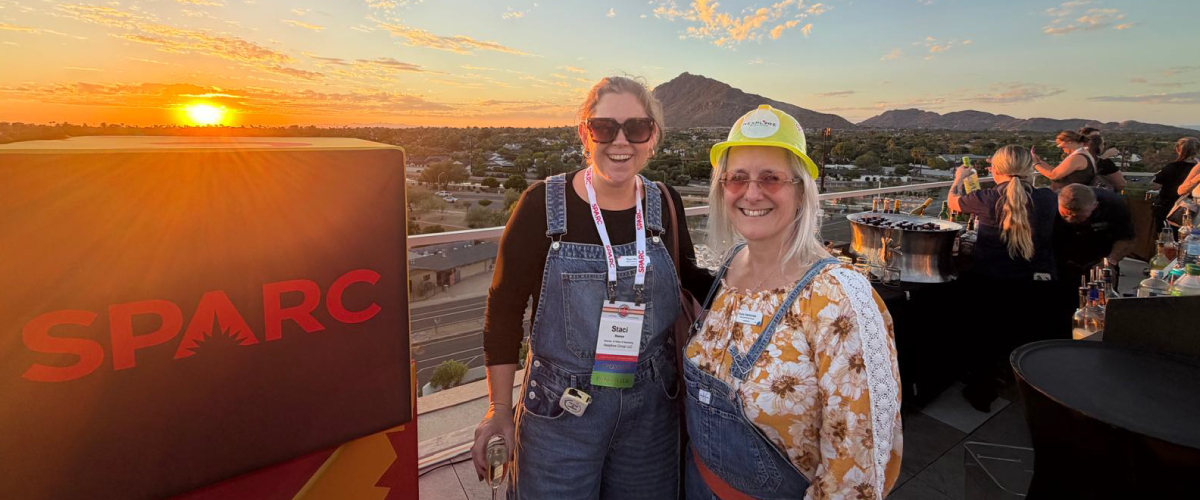
Our time at SPARC 2026 was an opportunity to learn, connect, and find inspiration alongside professionals who share our commitment to meaningful enrichment.
We’re excited to bring these ideas into our continued work developing engaging, hands-on experiences that help students learn through curiosity, creativity, and play.
Because when learning is active, purposeful, and fun, every experience can become an opportunity to discover something new.
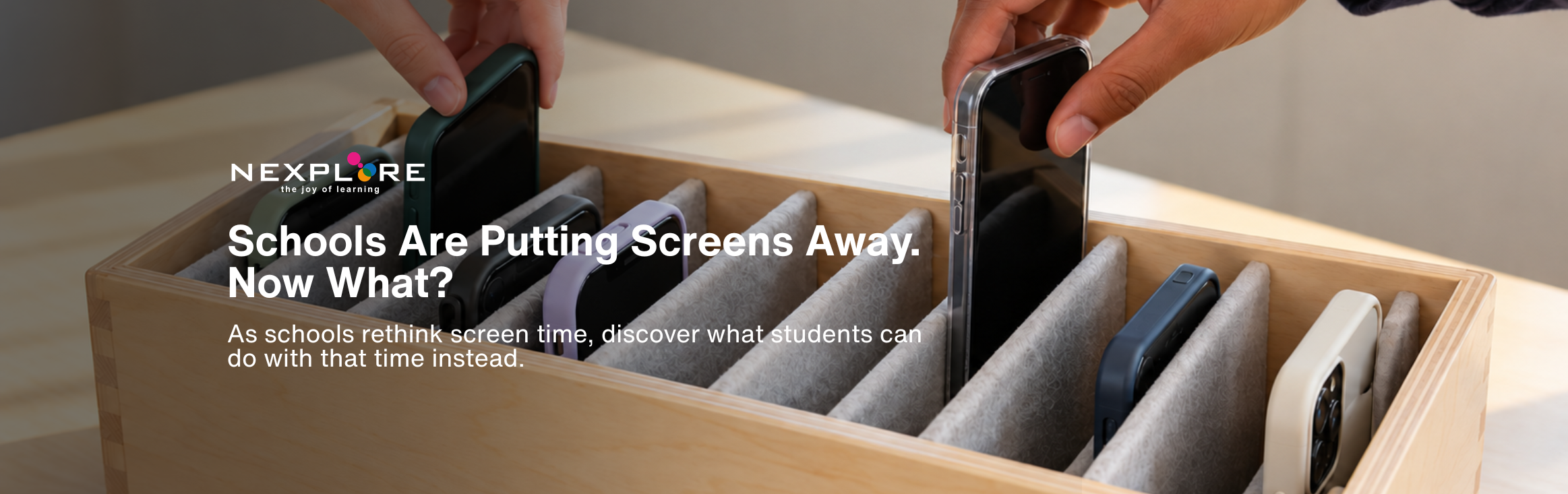
Schools Are Putting Screens Away. Now What?
Across the country, schools are rethinking how—and how often—students use screens.
One recent example comes from Seattle Public Schools. Beginning January 4, 2027, the district will stop assigning individual iPads to students in kindergarten through second grade. Instead, iPads will become shared classroom resources, and daily technology use will generally range from 0 to 30 minutes. The district says technology should support, not replace, hands-on and social learning in the early grades, according to Seattle Public Schools.
The shift reflects a larger question facing schools:
If students are spending less time on screens, what will fill that time?
The Push to Put Phones Away Is Growing
Today, reading proficiency goes far beyond decoding words on a page.
School Security Leadership’s state-by-state tracker, updated August 31, 2026, citing Ballotpedia, counts 45 states with laws or state-level policies on student cell phone use in K–12 public schools. Policies vary: some restrict phones bell to bell, others limit use during instructional time, and some leave the details to districts.
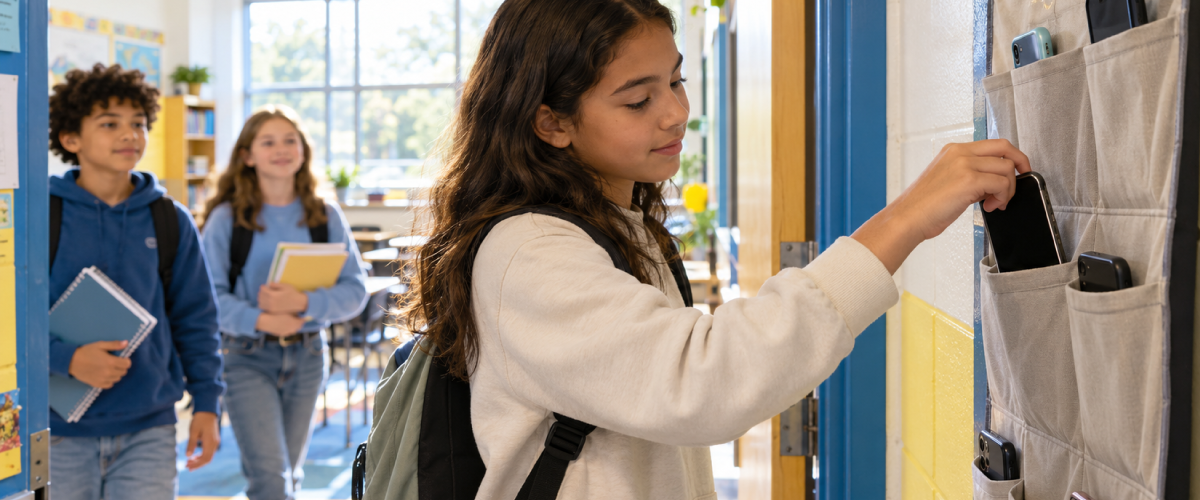
Florida tightened its rules again this year. For the 2026–27 school year, students in K–8 are prohibited from using wireless communication devices throughout the school day, from the first bell to dismissal. A pilot created by House Bill 1105 extends the same full-day restriction to high schools in six counties, according to The Florida Press.
California’s Phone-Free Schools Act (AB 3216) gave every district, charter school, and county office of education until July 1, 2026, to adopt a policy that limits or bans student smartphone use during the school day, according to School Security Leadership.
But what happens after the distraction is removed?
What Does the Research Actually Say?
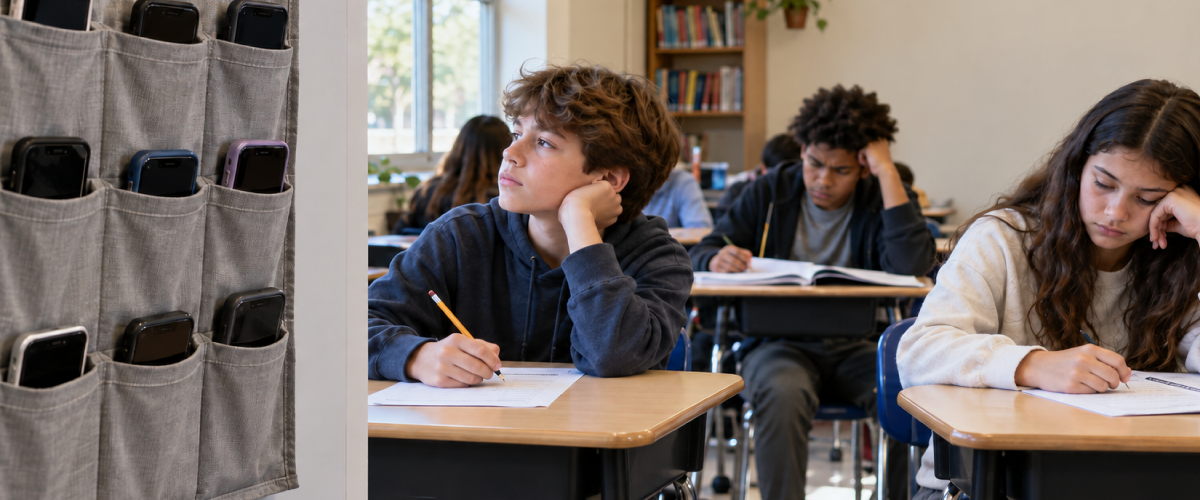
It’s tempting to assume fewer phones means higher test scores.
The research doesn’t support that.
A national study of schools using lockable phone pouches, released as a National Bureau of Economic Research working paper, found that pouches substantially reduced phone use. Student well-being showed signs of dipping in the first year, then recovered and turned positive in later years.
But for academic achievement, the researchers found that “average effects on test scores are consistently close to zero,” with little evidence of effects on attendance, classroom attention, or perceived online bullying, as summarized by Axios.
Taking something away is only part of the solution. What students do instead matters, too.
Why the Early Years Matter
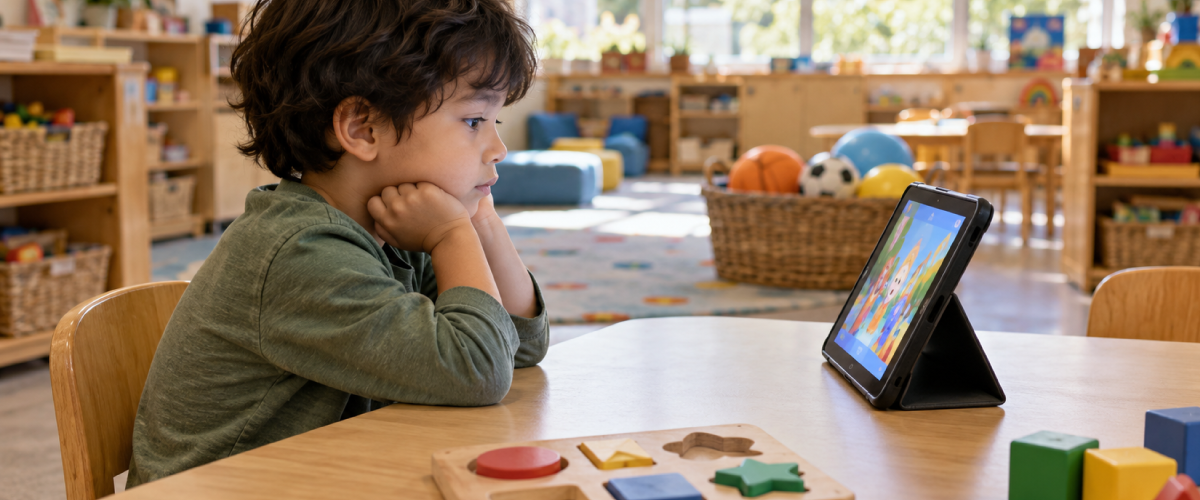
A study by researchers at Inserm and the National University of Singapore, published in the World Journal of Pediatrics, followed 502 children in Singapore from infancy to age 8. More screen time in infancy and around school-entry age was associated with weaker working memory and poorer academic performance later in childhood. The researchers write that “the timing of screen exposure may be as important as the amount of screen time itself,” per the study’s release on EurekAlert.
But the research isn’t one-dimensional.
An eight-year study from Finland’s University of Jyväskylä, published in Pediatric Exercise Science, found that teens who had more screen time growing up performed better on cognitive processing tests. Researcher Petri Jalanko suggests the type of activity is what matters: “Presumably, the essential point here is what kind of things they do in their screen time.” The researchers call for balance between screen time and physical activity and note that the findings show associations, not cause and effect, as reported by ScienceDaily.
The takeaway isn’t that every screen is harmful—or that every screen is helpful.
It’s that how students spend their time matters.
What Does the Research Actually Say?
Time away from screens is an opportunity for students to build, create, move, experiment, collaborate, and engage with the world around them.
That’s where hands-on learning can play an important role.
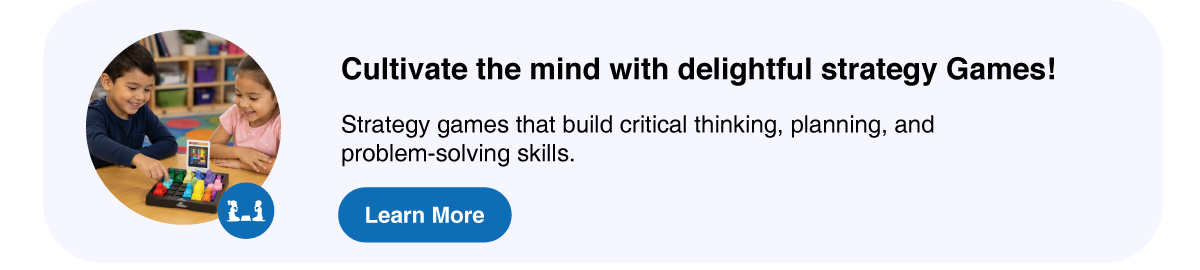
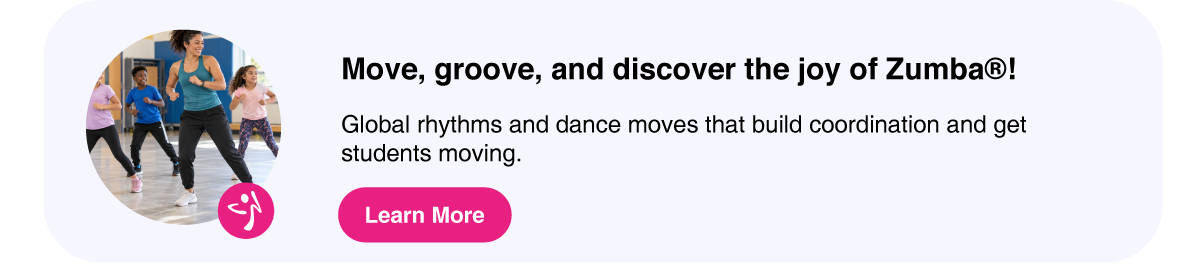
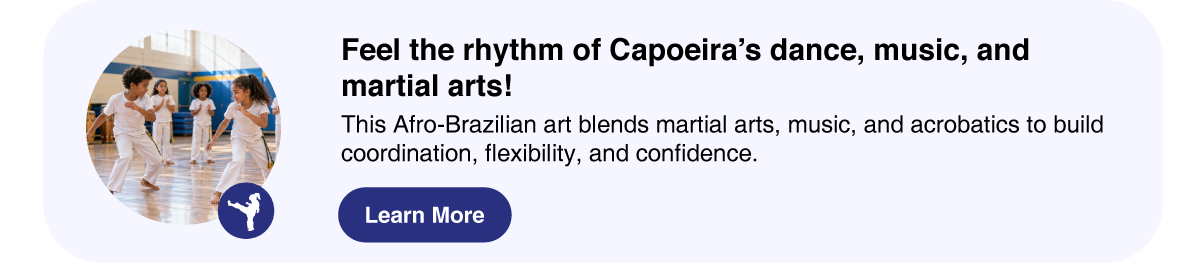
The Question Isn’t Just “How Much Screen Time?”
Seattle’s approach puts a useful question in front of schools: What should learning look like when the screen isn’t the center of the experience?
Phone restrictions can reduce phone use, and well-being benefits may emerge over time, while effects on test scores have been close to zero. Early-childhood research suggests the timing of screen exposure may matter, while other research points to balancing screen time with physical activity.
The conversation doesn’t have to be screens vs. no screens. It can be about creating a school day where students have more opportunities to think, create, move, explore, and connect—and where technology is used intentionally when it supports the learning goal.
Finding the Right Balance With Nexplore
The key is what students are doing with the technology.
Nexplore also offers programs that use screens as tools for creativity, problem-solving, design, and exploration.
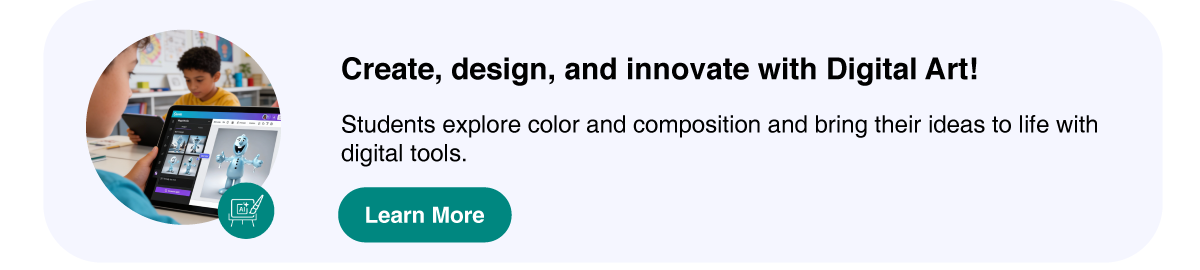
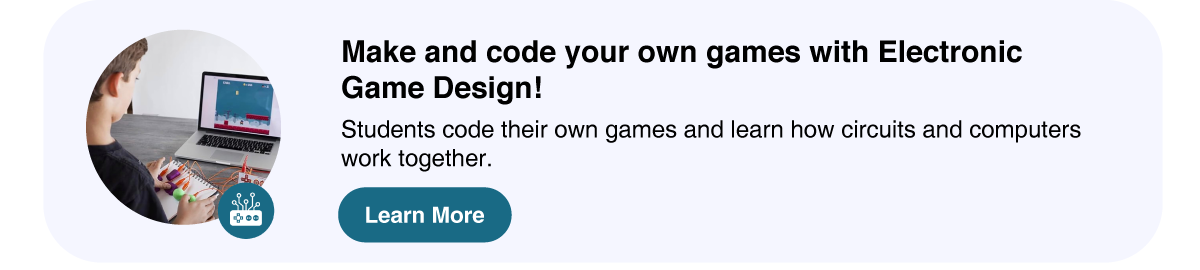
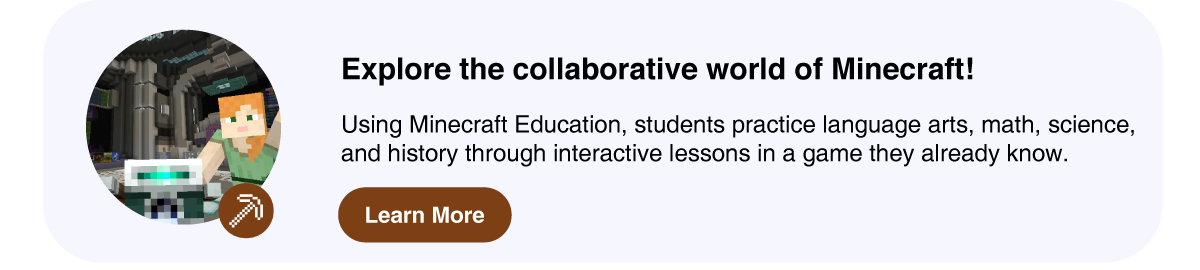
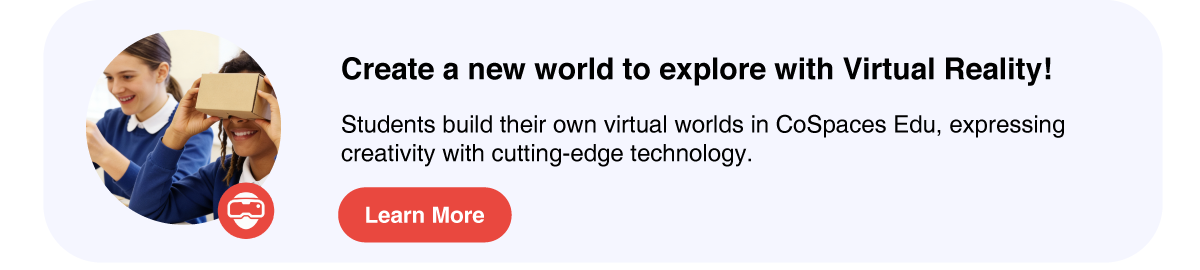
The goal is to make sure that when students use technology, they’re doing something meaningful with it.
Because when schools put the screens away, the next question shouldn’t be:
“What do we do with the time?”
It should be:
“What could students do with it?”
Ready to Create More Meaningful Learning Experiences?
Nexplore brings STEAM, arts, games, and fitness programs into schools and districts, with options that get students to create, explore, move, and learn by doing.
Let’s create more opportunities for students to engage with learning—on and off the screen.
👉 Talk with Nexplore about bringing hands-on and technology-enriched programs to your school.

Minecraft is a trademark of Microsoft. Zumba is a registered trademark of Zumba Fitness, LLC. CoSpaces Edu is a product of Delightex.

Celebrating the educator behind the JOY of learning: Genevieve Alcazar
At Nexplore, we love celebrating instructors who bring more than just a lesson plan into the classroom. This month, we’re proud to recognize Genevieve as our Instructor of the Month! 🎉
Genevieve combines preparation, professionalism, creativity, and strong communication to create classroom experiences that are structured, safe, and—most importantly—fun.
She is always looking for ways to improve, learn new skills, and make her lessons more engaging. Her creativity truly shines when she finds opportunities to turn a lesson into an experience students can remember.
One perfect example? During a kite-building activity, Genevieve didn’t stop once the students finished decorating their creations. She took the class outside so they could actually fly their kites! Watching students run through the grass as their kites soared brought the JOY of Learning to life.






💛 Thank You, Genevieve!
We are so grateful for Genevieve’s reliability, creativity, and commitment to her students. Her thoughtful preparation, positive energy, and ability to turn everyday lessons into meaningful experiences bring the JOY of Learning to life in every classroom.
That’s exactly what we celebrate with our Instructor of the Month. ✨


The Latest PISA Results Are a Wake-Up Call for Reading
What can schools do when reading becomes harder to understand, evaluate, and apply?
The latest PISA results are sending a clear signal: reading needs attention.
According to the 2025 PISA results released September 8, 2026, U.S. 15-year-old students had an average reading score of 490, down 14 points from 2022 — roughly a seven-month loss of learning, according to K-12 Dive’s analysis of the results. While U.S. students still performed above the OECD average, the decline raises an important question for schools: Are students reading—or really understanding what they read?
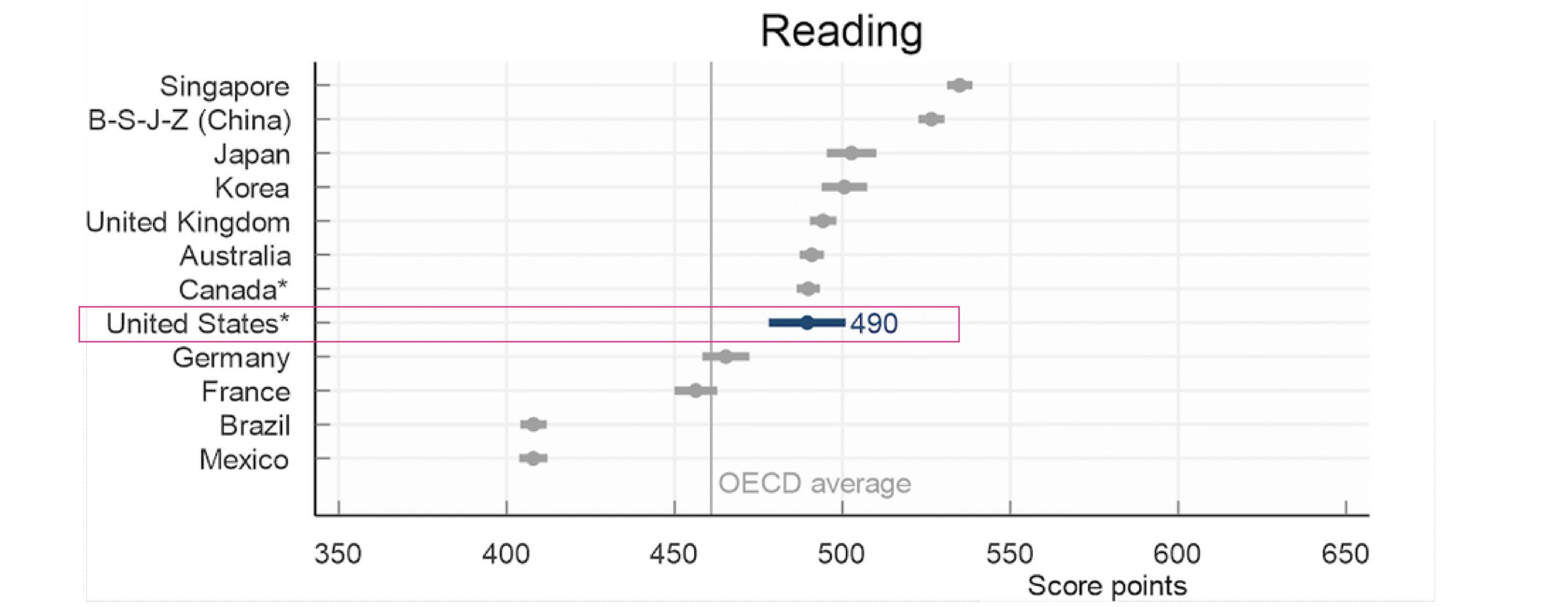
Source: Adapted from OECD (2026), PISA 2025 Results (Volume I): United States, Figure 3. Licensed under CC BY 4.0.
Reading Is More Than Getting Through a Page
Today, reading proficiency goes far beyond decoding words on a page.
PISA measures skills such as the ability to:
✅ Distinguish fact from opinion
✅ Synthesize and interpret information from different sources
✅ Deal with conflicting information
✅ Assess the quality and credibility of information
✅ Make inferences and connect ideas
These are the skills students need not only to succeed academically, but also to navigate an increasingly complex world of information.
1 in 4 U.S. Students Were Low Performers
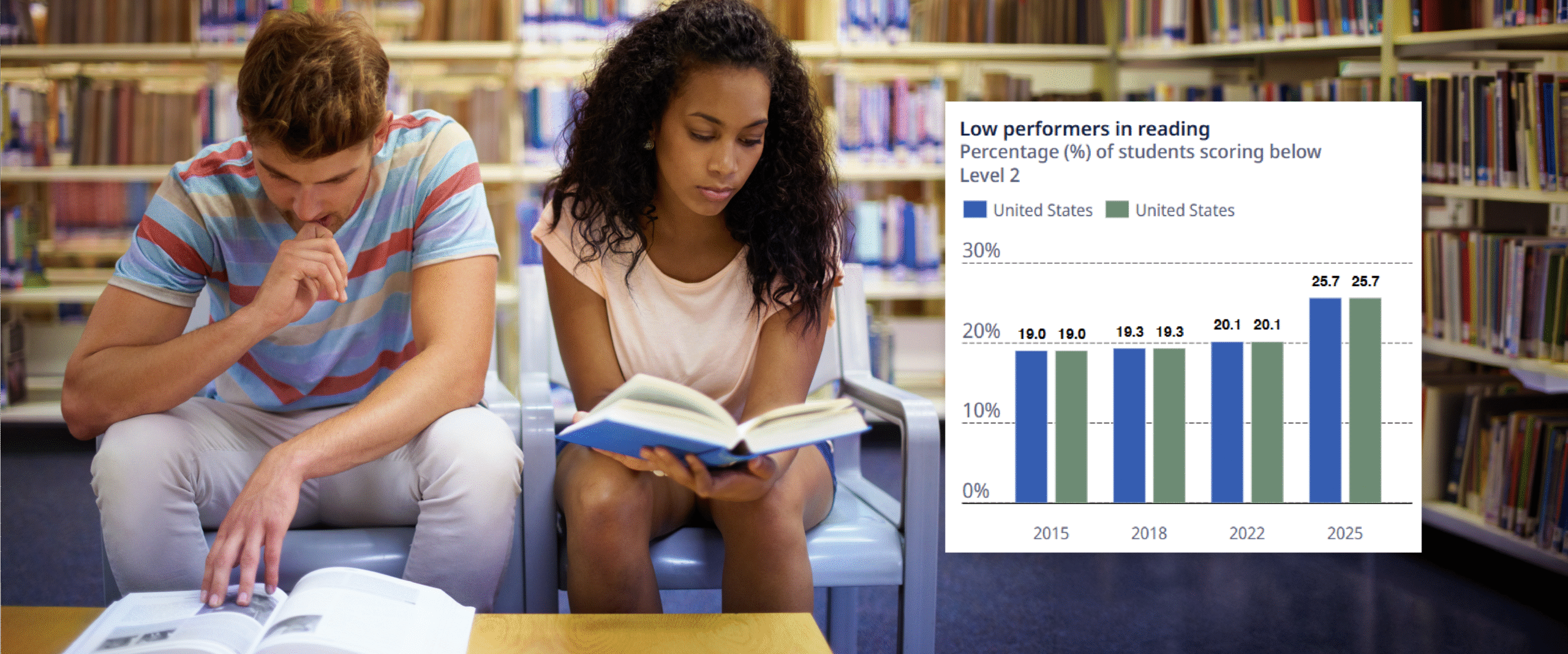
One of the most concerning findings is that 26% of U.S. test-takers were identified as low performers in reading, meaning they performed below PISA’s baseline Level 2.
At Level 2, students can identify the main idea of a moderately long text, understand relationships and construct meaning through basic inferences, and compare claims or evaluate reasons based on short, explicit statements, according to EdTrust’s analysis of the latest PISA results.
Students performing below this level have more difficulty comprehending lengthy texts, determining relevant information, reasoning from an extended text, and comparing, contrasting, and integrating information across multiple perspectives.
These higher-order reading skills matter.
The Gap Isn’t Just Wide — It’s Widening
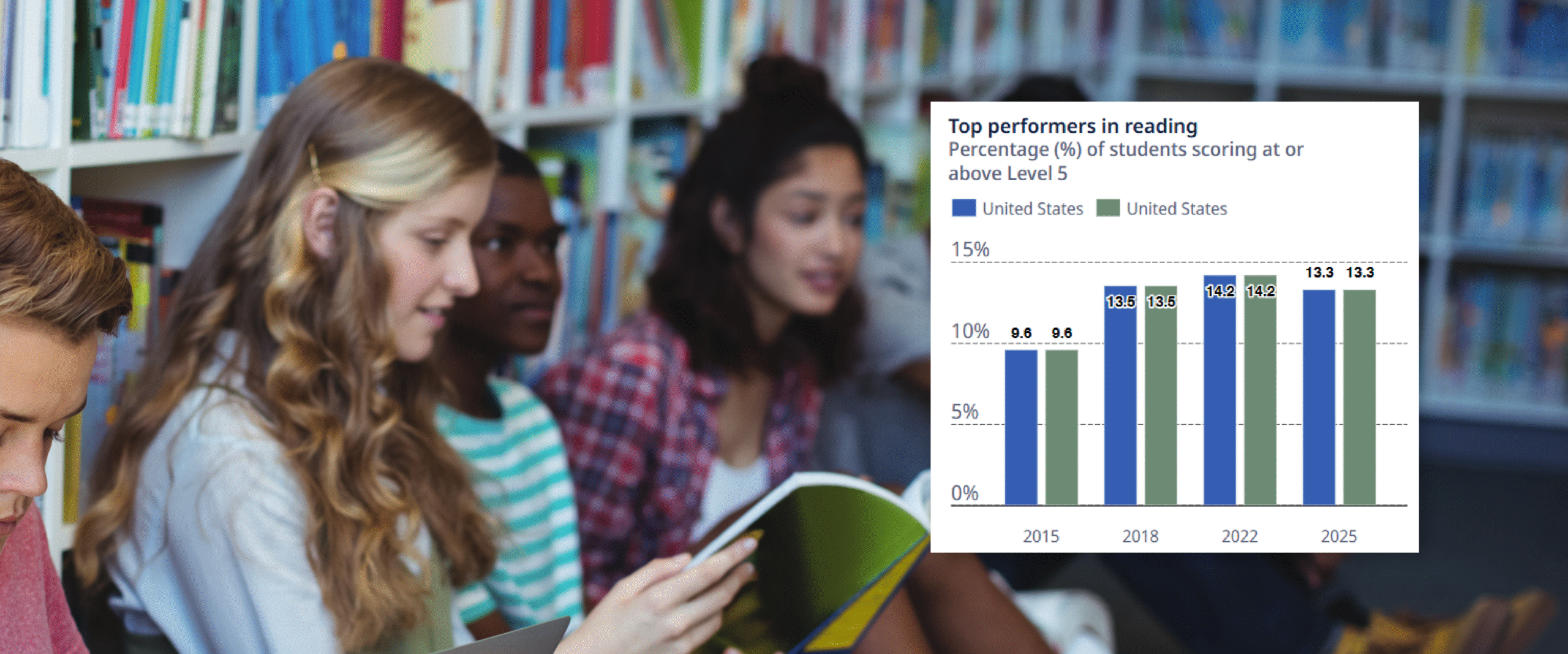
The gap between U.S. students at the 90th and 10th percentiles is the largest between top- and bottom-performing readers anywhere in the world, according to ABC News’ coverage of the results — and it has grown by 50 points since 2015, roughly 2.5 years of learning, according to U.S. Education Secretary Linda McMahon.
It’s not only struggling readers: just 13% of U.S. 15-year-olds qualified as high performers in reading.
The message isn’t that American students can’t read. It’s that the distance between them grows every year we wait.
So, What Can Schools Do?
The PISA results are a signal—but they don’t have to be the final word.
PISA tests 15-year-olds, but the skills it measures are built in elementary and middle school. By 15, that 2.5-year gap has had a decade to form.
Schools can create more opportunities for students to read, discuss, question, connect, and apply what they are learning.
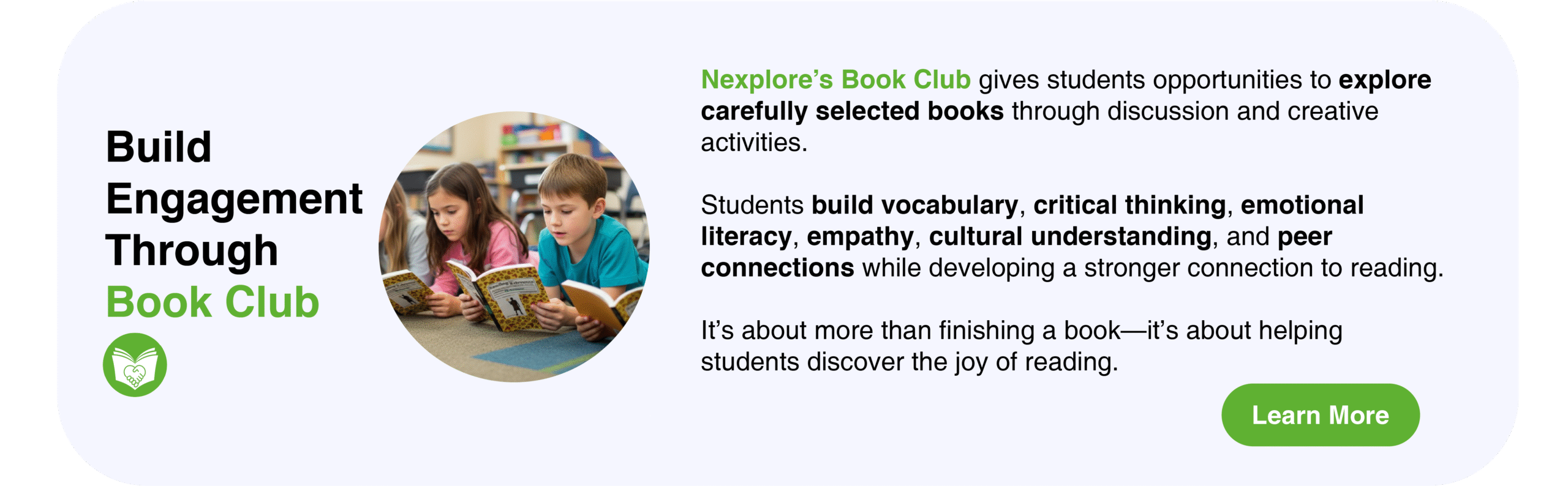
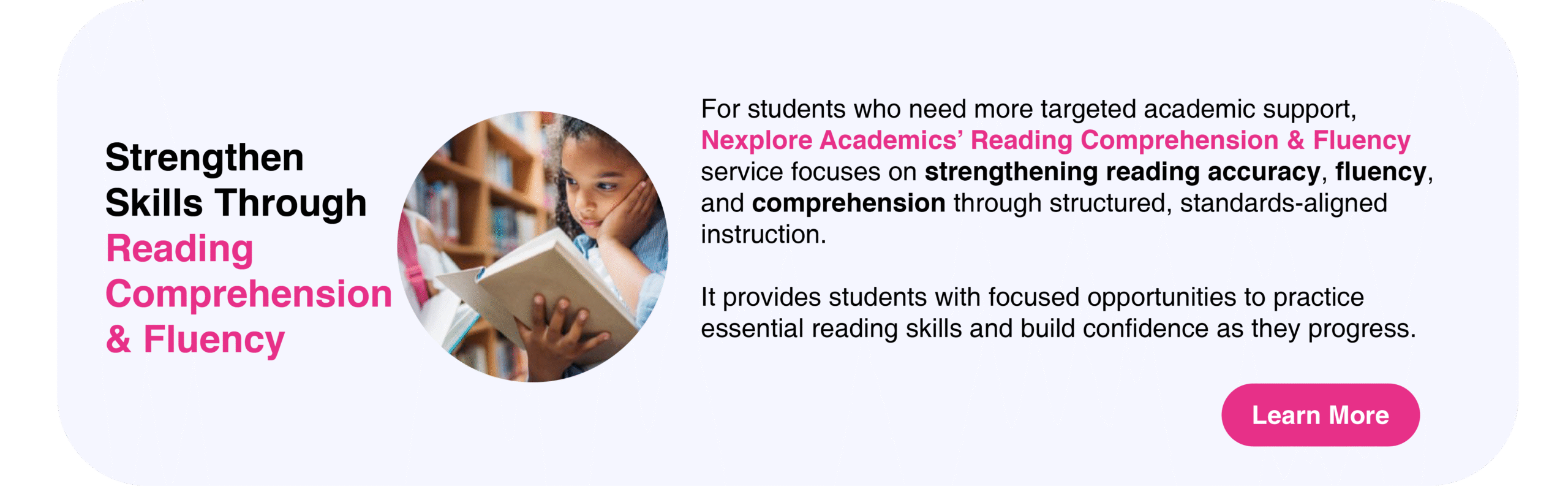
That can happen through engaging reading experiences that make students want to participate, as well as targeted academic support that strengthens essential skills.
Turn the Signal Into Action
The latest PISA results give schools plenty to think about.
But the most important question isn’t simply what happened to the scores?
It’s what can we do next?
Whether your school is looking to build stronger engagement with reading or provide targeted academic support, there are meaningful ways to help students become more confident, capable readers.
Let’s turn the conversation into action.

Homework Support vs. Pod Tutoring: What Do Your Students Really Need?
Not every student needs the same kind of academic support.
Some students need a quiet, structured place to finish their assignments. Others need targeted instruction to strengthen a specific skill or subject.
And sometimes, students need both.
📚 Homework Support: Helping Students Stay on Track
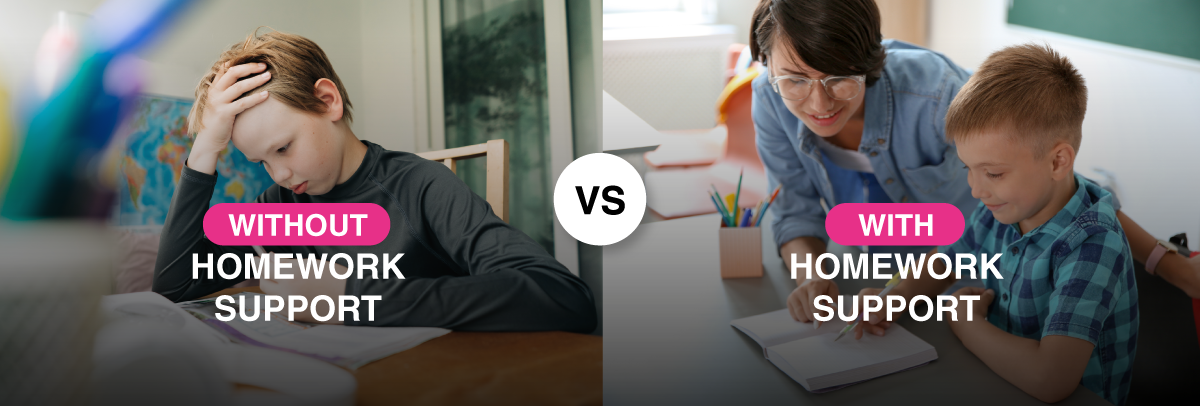
😵💫 Homework can quickly become a challenge when students don’t have the structure or support they need.
✏️ Homework Support gives students a dedicated space to work, stay focused, ask questions, and complete assignments with guidance available when needed.
✅ It’s about creating productive learning time—not simply getting through a checklist of assignments.
🎯 Pod Tutoring: Going Beyond Homework
Sometimes, completing the assignment isn’t the problem.
A student may need additional practice, more explanation, or a smaller learning environment where they can ask questions and build confidence. 💬
That’s where Pod Tutoring can make a difference.
With small-group support and focused instruction, students have more opportunities to practice skills, engage with the material, and receive the academic support they need. 🌟

🤔 So, Which One Does Your School Need?
The answer may be both. 🔄
📚 Homework Support helps students stay organized, focused, and on track.
🎯 Pod Tutoring provides more targeted academic support for students who need additional instruction and practice.
Together, they give schools more flexibility to support different learners and different needs. 🤝
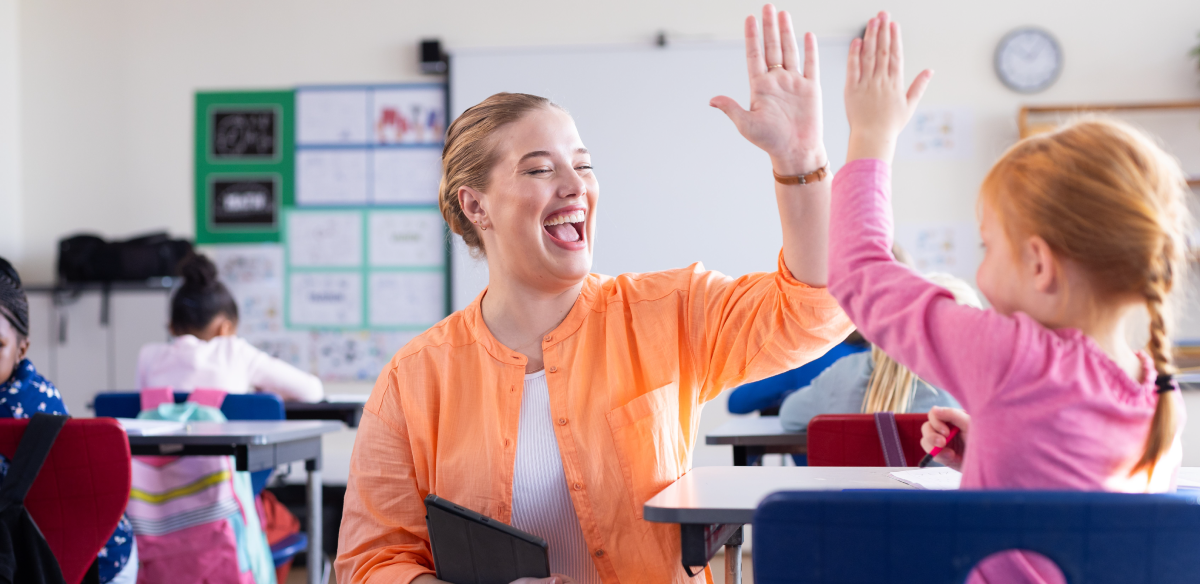
🌟 More Support. More Confidence. More Learning.
The goal isn’t to give students more work.
It’s to give them the right support at the right time. 💙
Explore how Nexplore Academics can help your school create a stronger academic support experience for students. 🚀

Back-to-School Raffle: Book with Us & Enter to WIN! 🎉
Make this school year even more exciting—and bring the Joy of Learning to your students.
The new school year is here, and we’re celebrating with a special Back-to-School Raffle!
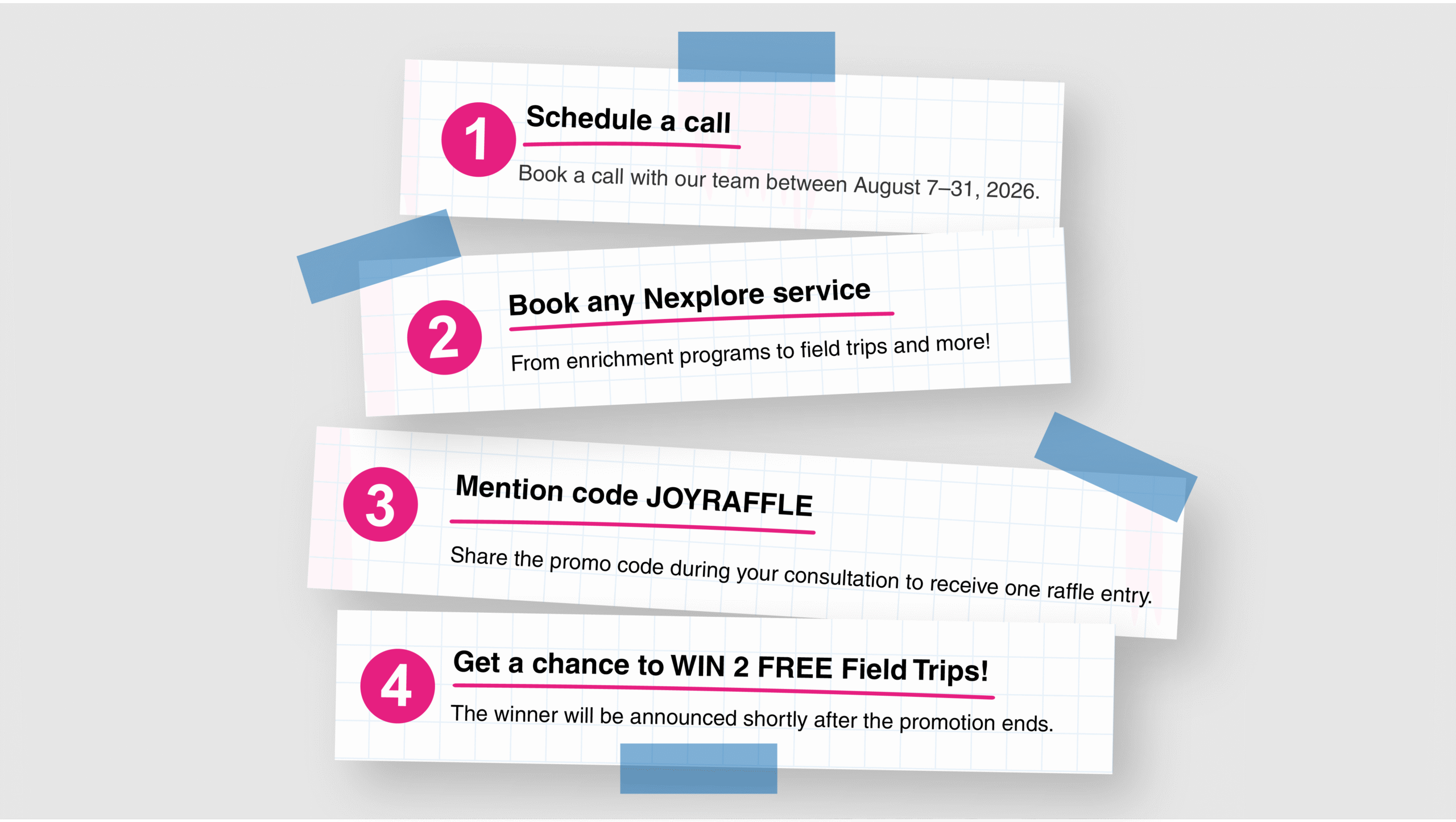
From August 7–31, 2026, schools that book with Nexplore can enter for a chance to win 2 In-House Field Trips for their students.
🏆 What Can You Win?
One lucky school will receive:

That’s up to 60 students getting to experience hands-on learning, creativity, and fun right at your school!
🎟️ How to Enter
Entering is easy:
💙 Why Nexplore?
From STEM and Digital Tech to Art, Life Skills, Fitness, and more, Nexplore offers hands-on enrichment experiences designed to spark curiosity, creativity, confidence, and the Joy of Learning.
Whether you’re an existing Nexplore partner or new to us, let’s make this school year one students will remember.
⏰ Don’t Miss Your Chance!
The Back-to-School Raffle ends August 31, 2026.
Book with Nexplore. Use code JOYRAFFLE. Enter to WIN!


Celebrating the educator behind the JOY of learning: Noon Elsaeyed
At Nexplore, we love recognizing instructors who go the extra mile to create meaningful learning experiences—and this month, we’re excited to celebrate Noon as our Instructor of the Month. 🎉
From day one, Noon has demonstrated an incredible commitment to preparation, creativity, and student success. Whether learning a brand-new curriculum, adapting lessons to meet students’ needs, or creating a welcoming classroom environment, she approaches every class with enthusiasm, professionalism, and genuine care.
Her thoughtful teaching style inspires students to explore, create, and grow while building strong relationships with schools, families, and fellow educators. That’s the kind of impact we love to celebrate.



🎥 Inside the Classroom
Noon’s classroom is filled with creativity, collaboration, and joyful learning. Through hands-on activities, encouragement, and thoughtful instruction, she helps every student feel confident to participate, explore new ideas, and celebrate their accomplishments.
Take a look inside her classroom and see the impact she makes every day.
💛 Thank You, Noon!
We are so grateful for Noon’s professionalism, preparation, and unwavering dedication to her students. Her creativity, compassion, and commitment create meaningful learning experiences that inspire confidence, curiosity, and growth in every classroom.
That’s exactly what we celebrate with our Instructor of the Month. ✨

Empowering Small Districts: Highlights from the 2026 Small School Administrators Summit
This July, the Nexplore team had the opportunity to attend the 2026 Small School Administrators Summit, held July 25–27, where school leaders from across California came together to prepare for the new academic year.
The summit focused on one shared goal: helping superintendents build strong strategic plans that will guide their districts throughout the 2026–2027 school year. It was an inspiring few days filled with collaboration, thoughtful discussions, and practical solutions for the unique challenges small school districts face.

🎯 Planning for a Successful School Year
Unlike traditional conferences, this summit was highly interactive. Superintendents spent most of their time in hands-on working sessions, collaborating with peers to develop strategic plans, share ideas, and identify priorities for the months ahead.
The atmosphere was focused, productive, and centered on creating real, actionable outcomes that will benefit students, educators, and their communities.

💰 A Positive Outlook for California Education
One of the event’s highlights was a presentation on California’s education budget for the upcoming year.
Attendees learned about what many are calling the strongest education budget the state has seen in more than a decade, bringing renewed optimism for schools across California.
For district leaders, this means new opportunities to strengthen programs, invest in students, and continue expanding meaningful learning experiences.
🌾 Supporting Small Districts, Big Impact
The Small School Administrators Summit serves a unique audience: superintendents from districts with fewer than 2,501 students, many of which are located in rural communities.
While these districts may serve smaller student populations, they often face significant challenges, including:
🍎 Recruiting and retaining qualified teachers
💵 Managing limited budgets
🏫 Maintaining facilities and operational costs
🤝 Providing high-quality opportunities with fewer available resources
Throughout the summit, leaders exchanged ideas and best practices to help overcome these challenges while continuing to provide exceptional educational experiences for every student.
🌟 Strengthening Partnerships Through Expanded Learning

At Nexplore, we’re always inspired by opportunities to connect with school leaders who are passionate about creating engaging learning experiences.
Events like the Small School Administrators Summit allow us to better understand the evolving needs of districts and explore how expanded learning programs can support schools by providing high-quality enrichment opportunities that complement the school day and help students thrive.
We’re grateful for the conversations we had, the relationships we strengthened, and the opportunity to support the incredible work happening in small school districts across California.
We look forward to continuing these partnerships and helping bring the Joy of Learning to even more students throughout the year. ✨

Celebrating the educator behind the JOY of learning: Rivaldo Lumelino
At Nexplore, we are proud to recognize instructors who consistently go above and beyond for their students, sites, and fellow team members. This month, we’re excited to celebrate Rivaldo as our Instructor of the Month. 🎉
Rivaldo exemplifies what it means to be a trusted educator and teammate. His reliability, professionalism, and commitment to student success make a positive impact everywhere he teaches. Whether supporting a new site, communicating with school staff, or creating engaging learning experiences for students, Rivaldo approaches every opportunity with enthusiasm and care.
His dedication to helping students grow and his commitment to building strong relationships make him an outstanding representative of the Nexplore mission.


🌟 Making an Impact Every Day
Rivaldo’s commitment to students can be seen in the positive classroom experiences he creates every day. Through encouragement, engagement, and meaningful connections, he helps students build confidence while making learning both enjoyable and rewarding.
💛 Thank You, Rivaldo!
We are so grateful for Rivaldo’s reliability, professionalism, and commitment to every student and site he supports. His dedication, positive attitude, and genuine care create meaningful learning experiences that inspire confidence, growth, and success in every classroom.

Celebrating The People Behind The Curtain: After-School Coordinator Appreciation Night Recap
At Nexplore, our mission is to foster the “Joy of Learning”. We know that this mission would be impossible without the dedicated educators who bridge the gap between school and home. Recent statistics indicate that over 1.1 million parents in Illinois are currently seeking after-school programming they cannot access, highlighting the critical importance of the work performed by Out-of-School Time (OST) departments across the state.
To celebrate these unsung heroes, Nexplore hosted our Site Coordinator Appreciation Night on Monday, May 18th, at Flight Club Chicago.

An Evening of Connection and Joy
The event brought together approximately 60 site coordinators, along with their friends, families, and colleagues. Attendees traveled from as far as South Chicago, Des Plaines, and LaGrange to celebrate the community we have built together.
Public, private, and charter school coordinators enjoyed an evening of “work-casual” fun featuring high-tech darts, great food, and drinks. While some were seasoned pros, many beginners surprised the crowd by outranking experienced players! Notable dart board winners included Blaine Wang and Angel Hernandez.

Recognizing Excellence: The 2026 Nexplore Awards
At the heart of the evening was the presentation of the 2026 Nexplore Awards. These honors recognize individuals and organizations that embody our core values of Consistency, Competence, Communication, Creativity, and Community.


This successful evening was made possible by the hard work of our Logistics and Marketing Director, Jesse Stephens, who organized the venue and event details.
Most importantly, we want to thank our partners. Your commitment to student growth—academically, socially, and emotionally—is what drives us to provide high-quality STEAM, Life Skills, and Fitness enrichment. Thank you for everything you do to keep the learning environment thriving long after the final school bell rings.
We look forward to many more years of sparking discovery and excellence together!
